

Service highlights
- Service number: 324949
- Rank at discharge: Farrier Sergeant
- Born: 3 September 1894, Newcastle, Natal, South Africa
- Civilian occupation: Blacksmith
- Enlisted: 10 April 1916 at Guelph, Ontario, with the 56th Overseas Battery, Canadian Field Artillery
- Front line unit: served with the 8th Brigade, Canadian Field Artillery, later redesignated the 8th Army Brigade
- Promoted: Corporal in July 1917 and Sergeant in August 1918
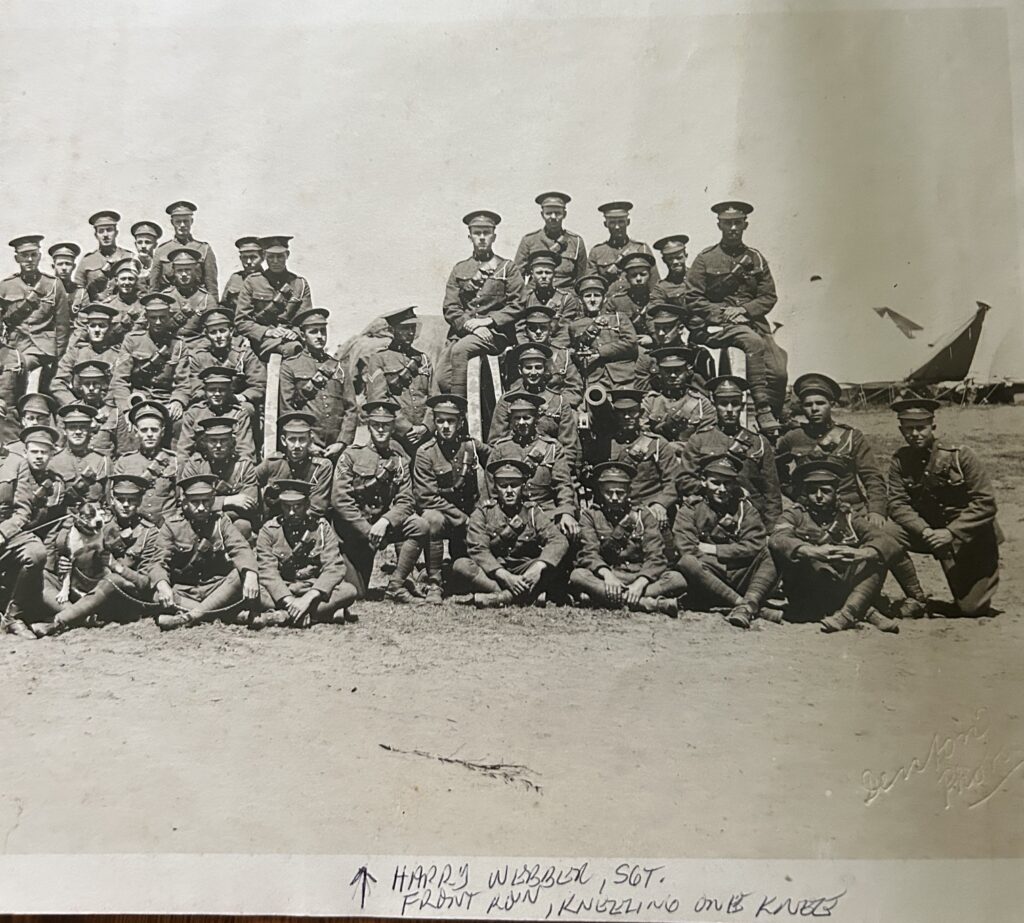
- Wartime role: Served as a farrier, shoeing and caring for the horses and mules
- Illness: Hospitalized with The Spanish Influenza in France from 10 to 24 July 1918
- Discharged: 8 April 1919 following demobilization
- Community service: President of the St. Marys Legion in 1938 and 1939, longtime Blanshard Township councilor, Freemason, and member of the Woodham L.O.L. 492 Band
- Died: 1976 in St. Marys, Ontario
- Buried: Kirkton Anglican Cemetery
- Commemorated by family through the St. Marys Legion Veterans Banner Program
A Life and Service Remembered
Henry George Webber, known throughout his life as Harry, was born in Newcastle, Natal, South Africa in 1894, the eldest of four children of Henry George Cann Webber and Annie Elizabeth Powell. His earliest memories were formed in a very different world from the Ontario community he would eventually call home. His family lived outside Newcastle, where his father operated a store and hotel, and Harry grew up alongside local Zulu families and learned to speak Zulu. Family stories recalled the Boer War unfolding around them and a young Harry sheltering with his family beneath a covered wagon for three days during some of the fighting.
His childhood changed dramatically after his father died in 1905. His mother took the children to England, and Harry and his younger brother Charles were placed in a Barnardo’s Children’s Home. His mother and sister disappeared afterwards. Harry spent about four years there, attending school and travelling with a band, making use of the musical ability that would remain part of his life. In 1910, at sixteen, he was sent to Canada through Britain’s child immigration program. He first worked on a farm near Staffa before being placed with a local blacksmith to learn the trade that would shape the rest of his working life.
Harry enlisted in the Canadian Expeditionary Force in April 1916. After training in Canada he arrived in England aboard the SS Metagama in September 1916. He was sent to France in March 1917 and eventually joined the 8th Army Brigade, Canadian Field Artillery. His skill as a blacksmith made him particularly valuable in an army that still depended heavily on horses. Family records recall that, as a farrier, Harry was responsible for shoeing and helping care for more than 75 horses and mules used to move guns, ammunition, and supplies near the front.
Harry kept a diary throughout his wartime service. He wrote about camp life, the regular shelling around them, and about Mae Hanna, the young woman waiting for him in Canada. Some experiences were harder to put into words. His family recounts that on days when he had been assigned to a burial party, or when someone close to him had been killed, his diary sometimes contained only a single line.
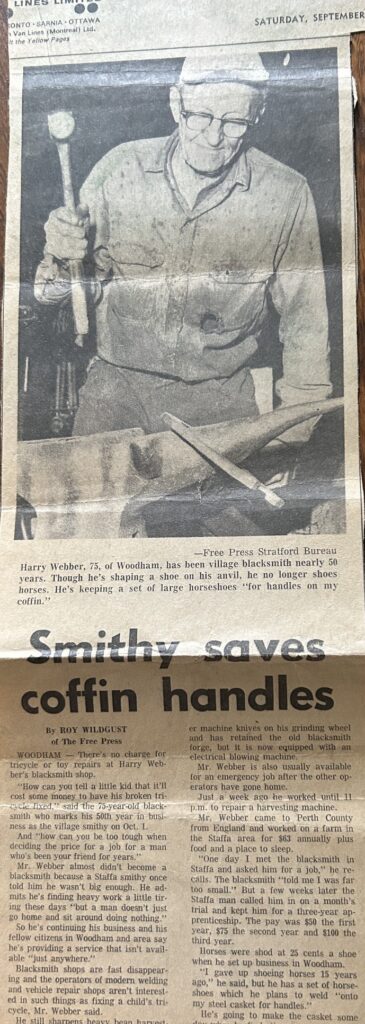
After returning to Canada, Harry married Mae in Cromarty in September 1919. They settled in Woodham, where he purchased a shop and established both a chopping mill and blacksmith business. Together they raised three children, George, Dorothy and Helen. Their son George later followed his father’s example by serving during the Second World War.
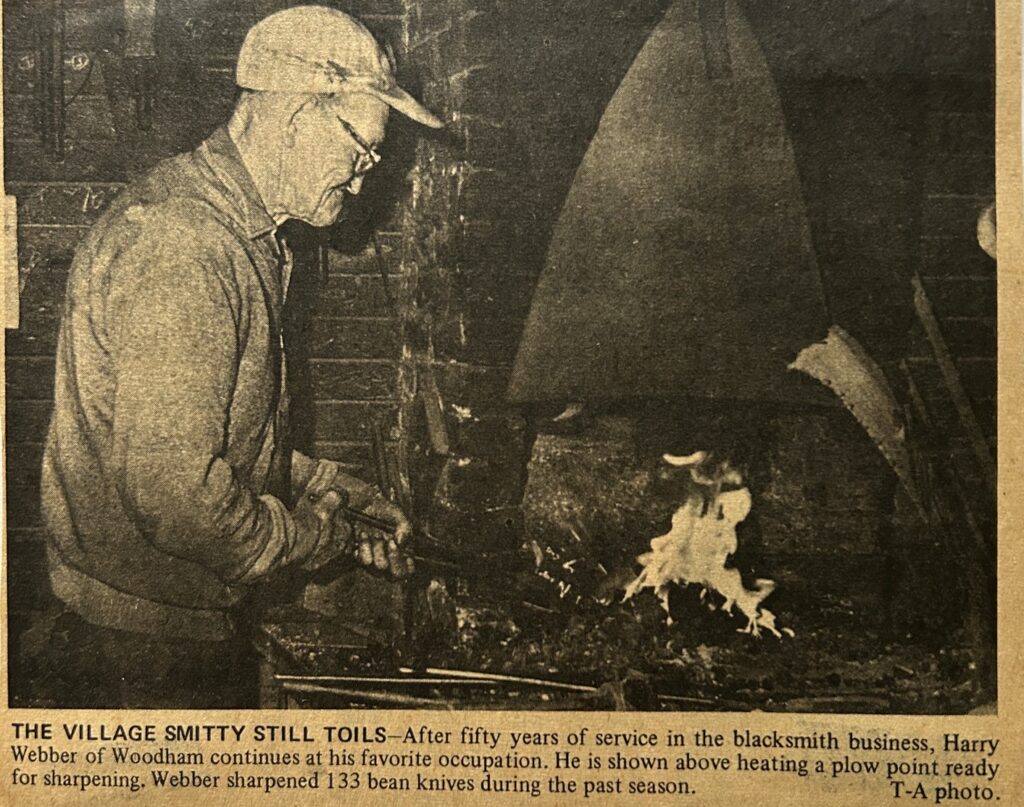
Harry became a familiar figure in the community. He served as President of the St. Marys Legion in 1938 and 1939, sat on Blanshard Township council for many years, was a Freemason, and played with the Woodham L.O.L. 492 Band. As horses gradually disappeared from everyday farm work, he adapted his blacksmith business, including sharpening bean knives for local farmers. He continued working at the forge for more than fifty years.
For his grandson Bob Cowdrey, the memories were much more personal. Harry taught him to count to ten in Zulu and welcomed him into the blacksmith shop, where Bob learned to sharpen bean knives alongside his grandfather. Even decades after leaving South Africa, Harry continued sharing the stories and language of his childhood with his family. He died in St. Marys in 1976 and was laid to rest in Kirkton Anglican Cemetery.
Major battles and operations
- Battle of Hill 70, August 1917
- Battle of Passchendaele, October and November 1917
- Battle of Amiens, August 1918
- Arras and the Drocourt-Quéant Line, August and September 1918
- Canadian Hundred Days operations, 1918
Learn More
Library and Archives Canada, Henry George Webber service file
https://central.bac-lac.gc.ca/.item/?op=pdf&app=CEF&id=B10186-S020
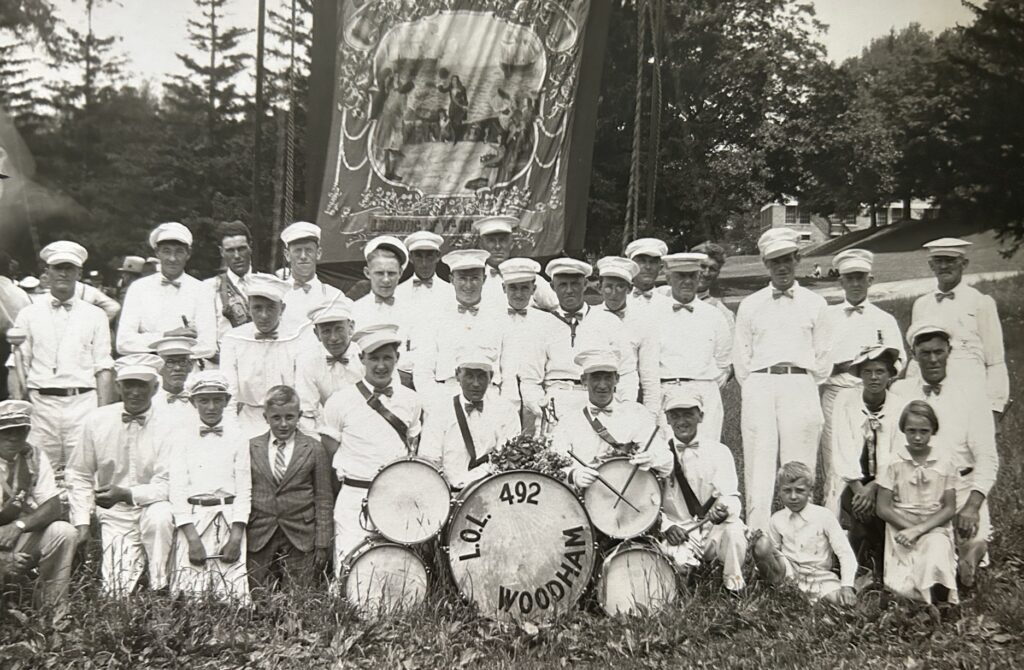
Front row, 5th from Left GEORGE WEBBER, kneeling with 2drums
Back row Left – Harry Webber holding Staff/Baton
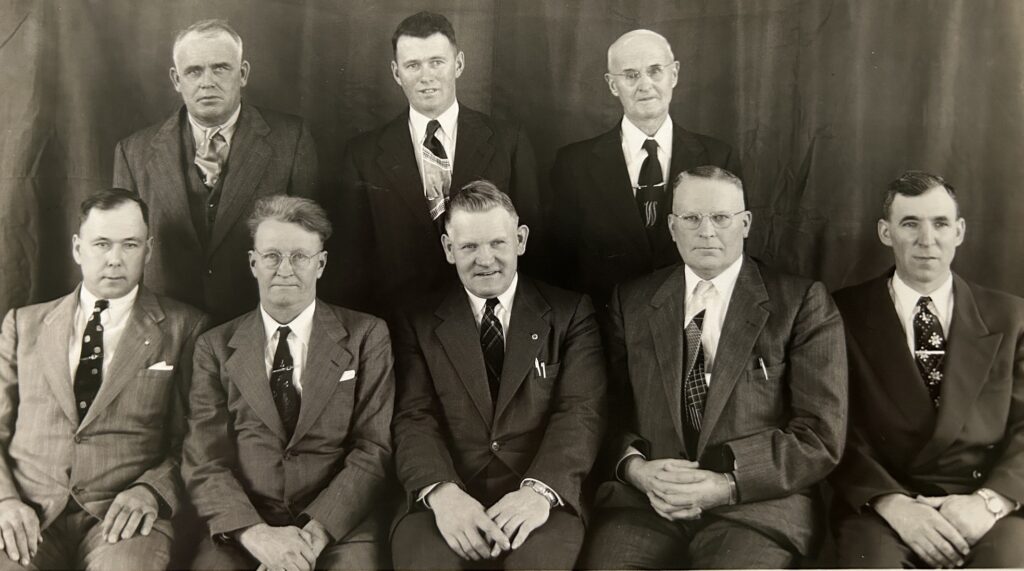
1953 BLANSHARD TWP. COUNCIL
Stanley John Turnbull (Road Supt.)
Morris Wells (Clerk)
Walt Lank? (Treasurer)
Ken Hodgins
John Stephens (Reeve)
Alvin Crago
Clarence Smythe
HARRY WEBBER SITTING, 2nd FROM LEFT