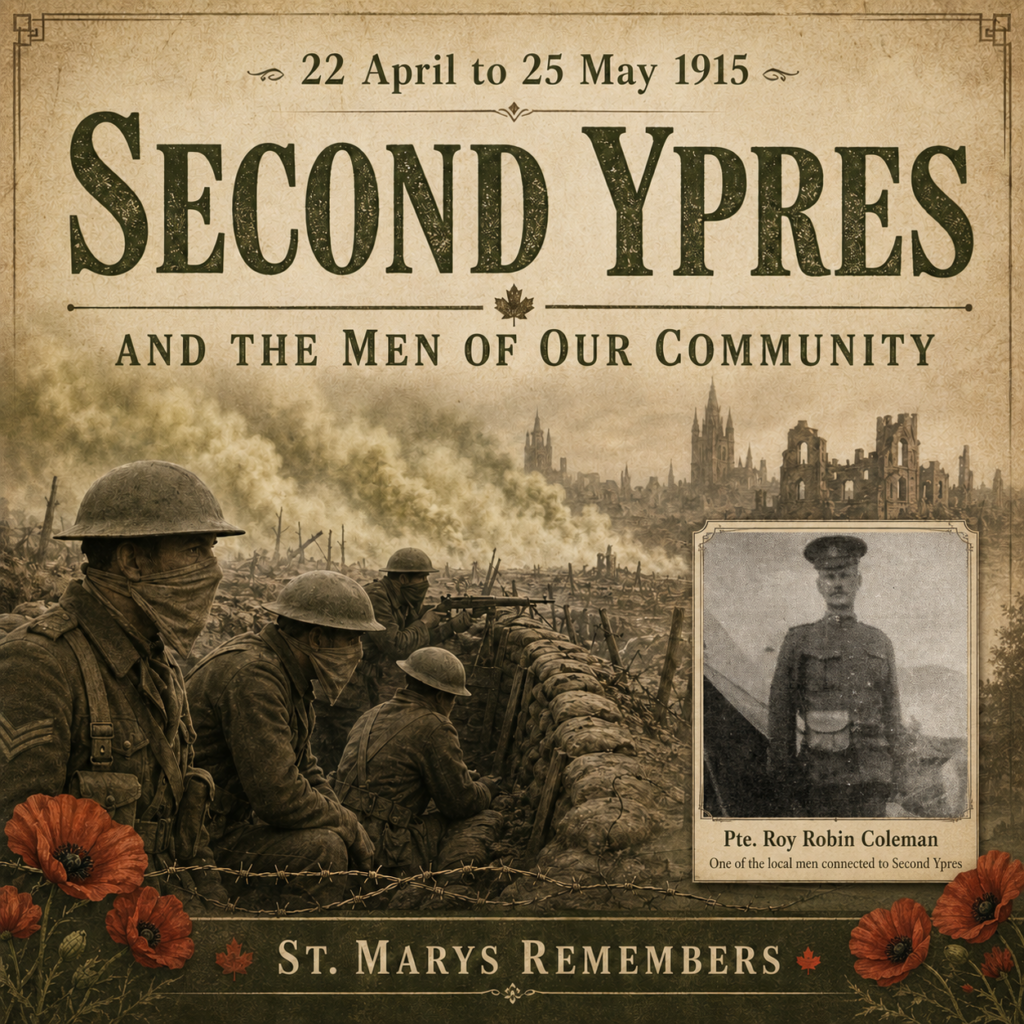
The Royal Canadian Legion marks the Second Battle of Ypres on 25 May 1915. The most famous moment of the battle began more than a month earlier, on 22 April 1915, when German forces released chlorine gas against Allied troops near Ypres, Belgium. The fighting continued until 25 May 1915.
For Canada, Second Ypres was one of the first great trials of the First World War. Canadian troops had only recently arrived on the Western Front when they were drawn into a crisis unlike anything they had seen before. The gas attack opened a dangerous gap in the Allied line, and Canadian soldiers helped hold the position under shellfire, confusion, and choking gas.
The cost was enormous. In the first days of the battle, the 1st Canadian Division suffered roughly 6,000 casualties. Second Ypres became a symbol of Canadian endurance, but also a warning of the terrible kind of war that was unfolding. For St. Marys and the surrounding area, Ypres was not just a place on a map. It was connected to local men who had lived, worked, trained, or passed through this community before going overseas and found themselves in the middle of this fight.
The following honorees are among those connected to the Second Battle of Ypres through the records and remembrance pages researched on our site to date:
Private William Joseph Hannaberry was born west of St. Marys and was among the first local men to volunteer in 1914. He served with the 1st Canadian Infantry Battalion and came through Second Ypres. Only weeks later, he was reported missing after the attack near Givenchy on 15 June 1915 and was later presumed dead. He has no known grave and is commemorated on the Canadian National Vimy Memorial.
Private Frank Finnie was born in St. Marys and served with the 1st Canadian Infantry Battalion. His remembrance page notes that he rejoined the battalion in France on 30 April 1915, as it was recovering from the losses of Second Ypres. Like Hannaberry, he was later reported missing after the fighting at Givenchy on 15 June 1915. He is remembered on the Canadian Memorial to the Missing at Vimy Ridge and on the St. Marys cenotaph.
Private Roy Robin Coleman was among the early Canadian volunteers of 1914. His service record connects him with the Second Battle of Ypres and the first year of Canadian fighting on the Western Front. Unlike Hannaberry and Finnie, Coleman survived the war and was later discharged from service. His story reminds us that remembrance includes both those who died and those who returned carrying the war with them.
Second Ypres was only the beginning of Canada’s long connection to the Ypres Salient. Canadian soldiers would return to this area again and again, including during the fighting around Mount Sorrel, Sanctuary Wood, and Hill 60 in 1916, and at Passchendaele in 1917. Many more of our remembered servicemen belong to those later chapters, which deserve their own articles.
Between 22 April and 25 May 1915, Canadian soldiers faced poison gas, artillery, machine guns, and heavy casualties in one of their first major battles of the war. For families at home, including families in communities like St. Marys, it marked the start of a long and painful connection to the battlefields of Europe.
More than a century later, as we move through this anniversary year, we remain committed to ensuring that our local connection to historic events like Second Ypres remains part of both Canadian history and local remembrance. Through men such as William Hannaberry, Frank Finnie, and Roy Robin Coleman, we are reminded that the great battles of the First World War were lived by individuals for our families, in communities like our own.
In April 1917, Canadian soldiers went forward at Vimy Ridge in one of the defining battles of the First World War. As we celebrate the 100th anniversary of our Legion, I found myself wondering how many sons of St. Marys served in, and helped shape the outcome of, one of the most remembered battles in our nation’s history. Vimy has come to represent courage, sacrifice, and a growing sense of Canadian identity. As I have worked to build our online memorial, it has become clear that many men from this region stepped forward and played a role in helping turn the tide of the war for the Allies.
These men were not simply names attached to a famous battlefield or carved onto a memorial. They were our ancestors. They came from the streets, farms, and families that still define this community today. They were farm workers, clerks, machinists, labourers, students, husbands, sons, and neighbours. Some went into the attack at Vimy Ridge itself. Some were wounded there. Some never came home. Others served in the wider Vimy sector during the dangerous weeks and months that followed, carrying messages, moving supplies, reinforcing positions, and pushing forward into places like Arleux, Fresnoy, Lens, and Hill 70 as part of the same long ordeal.
Together, their stories show that Vimy was not just a single moment, but part of a larger lived experience of endurance, sacrifice, and service. That is why these local honouree pages matter. They bring stories like Vimy home. They remind us that remembrance begins with individual people and local places. Each name carries its own history, and together they show how deeply this community was tied to one of Canada’s defining moments overseas.
The following honourees are among those connected to Vimy Ridge through the records and remembrance pages researched on our site to date:
Killed at Vimy Ridge
Private Newton Arthur Heard was killed at Zero Hour on 9 April 1917 while advancing with the 75th Battalion in the opening assault at Vimy Ridge.
Private George Albert Dunham was wounded in the fighting on 9 April 1917 and died of those wounds that night or the following morning.
Private Bert (Albert) Parker Robinson fought at Vimy Ridge on 9 April and was wounded in the attack on the Pimple on 12 April, dying of wounds on 13 April 1917.
Wounded at Vimy Ridge
Private Frank Raymond Sinclair was wounded on 12 April 1917 during the Vimy fighting and later returned to service before being killed later that year in the Ypres Salient.
Clarence Martin was wounded on April 11, 1917 at Bois de la Folie and suffered a compound fracture of the right femur from a gunshot wound. After a lengthy recovery he was unable to return to service and discharged as medically unfit in 1920.
Private Earl Edward Gardiner served near Vimy Ridge with the 58th Battalion and took part in the battle in April 1917 before being killed later in the Lens sector.
Private Herbert Stubbins fought at Vimy Ridge in April 1917 and was wounded and died on 7 May 1917 after front line duty north of Vimy.
Sergeant Oliver James McIntosh fought at Vimy Ridge in April 1917 with the 44th Battalion he suffered multiple wounds before being fatally at Passchendaele on October 10, 1917.
Private William Frederick Vanstone served near Vimy Ridge with the 58th Battalion , before later being killed in October 1917 during the Battle of Passchendaele.
Served in the Vimy sector or Vimy aftermath
Private John William Payne served in the Vimy sector in early 1917 and was later reported missing and presumed killed after the fighting near Fresnoy in May 1917.
Private Lionel Sydney Nutt was present in the Vimy area and was killed on 28 April 1917 during fighting near Arleux-en-Gohelle after the main Vimy assault.
Private William Earl McMaster joined D Company of the 4th Canadian Mounted Rifles in the Vimy sector and later suffered serious gas exposure in that wider front.
Private George Lawrence Beatty was transferred to the 52nd Battalion near Vimy Ridge and later fought at Hill 70 and in the Lens trenches, where he was killed in September 1917.
Private James Cook was wounded in the Lens sector in July 1917, returned to his battalion in the Vimy sector in January 1918, and was killed by shellfire four days later.
Private William George Sandercock served in the Vimy area with the 4th Canadian Mounted Rifles in 1917 before being killed during the Hill 70 and Lens operations.
Private James Cecil Sandercock was posted to the 4th Canadian Mounted Rifles near Vimy Ridge, later wounded at Lens, and continued to serve until he was killed in August 1918.
Lance Corporal Clarence Robson served with the 38th Battalion near Vimy and later continued through Lens, Passchendaele, and trench tours in the Vimy sector.
Private James O’Connell joined the 58th Battalion on 4 April 1917, in time for the Vimy assault, then served through Fresnoy and Hill 70 before being mortally wounded at Passchendaele.
Private Frederick James Todd served in the Vimy sector and was a gas casualty near Vimy Ridge in February 1918 before returning to the line
Private Percy Alfred Foster served in the Vimy area with the 4th Battalion, CEF in the Vimy sector and later suffered serious gas exposure and a gunshot wound to the arm prior to being discharged.
Today, more than a hundred years later, we invite you to take a moment to truly see these names, to read and share their stories, and to reflect on how they may connect to you, your family, and our community.
Vimy Ridge was not only a national achievement marked in textbooks and ceremonies. It was also something lived by local people from this community and the surrounding area. Their service, sacrifice, and stories all form part of the local legacy of remembrance that Branch 236 continues to preserve.
As we move through this anniversary year, we remain committed to ensuring that our local connection to historic events like Vimy Ridge is not forgotten.
The Royal Canadian Legion’s Track & Field Program, which has been in existence for over 50 years, is designed to provide training and competition at District, Provincial and National levels for young Track & Field athletes 10 years to 17 years of age. It also provides, at no cost to the athlete, an opportunity for young athletes to visit different parts of Canada, mix with athletes and coaches from across the country and to make them conscious that the Legion cares for them and their future. Many of the athletes that have participated in our program, have gone on to become Olympic medal winners and many have progressed to other fields of sport, such as Wayne Gretzky, a Provincial Medal winner in Track & Field.
Athletes qualify for the Provincial Team by attending the District Track & Field Meet, where they compete along with approximately 300 other athletes. This year, up to 400 athletes will attend the Provincial Meet where they then can qualify to attend the National Meet – the Canadian Youth Athletic Championships.
The District Meet is held in June, with the Provincial in July and National in August. Athletes are funded by their local Legion branches, the Provincial and Dominion Commands.
You can register at www.trackie.com/event/DistrictC2026.
2026 CRYSTAL TAYLOR MEMORIAL DISTRICT C TRACK & FIELD MEET is JUNE 13, 2026
Jacob Hespeler Track, 230 Bechtel Street, Cambridge, ON N3C 2A1
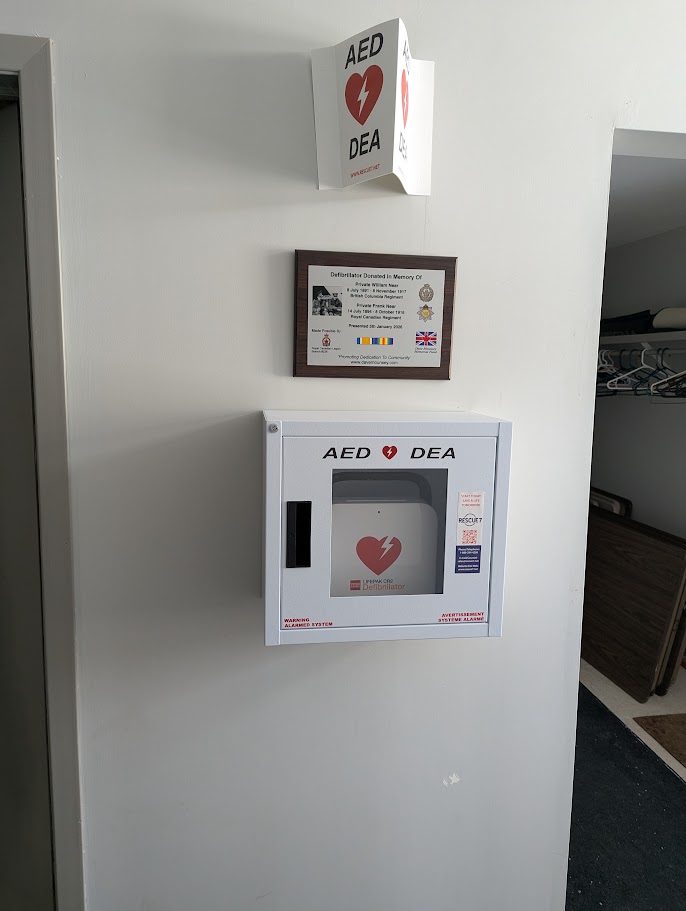
On February 14, Branch 236 of the Royal Canadian Legion in St. Marys held a dedication ceremony for an Automated External Defibrillator (AED) donated through the Dave Mounsey Memorial Fund. The device was dedicated in memory of Frank and William Near, two brothers from St. Marys whose story of service and sacrifice speaks to the personal cost carried by so many Canadian families.
Before the war, Frank worked as a barber and William as a freight agent in St. Marys. Frank enlisted on June 28, 1915, with the 33rd Canadian Infantry Battalion. William followed less than two months later, enlisting on August 16, 1915, with the same battalion in London. On April 1, 1916, they sailed together from Halifax aboard the SS Lapland, crossing the Atlantic side by side into the unknown.
Though they tried to stay together, Frank was transferred to The Royal Canadian Regiment while William was diverted to the 7th Canadian Infantry Battalion. William applied to have Frank transferred to serve alongside him, but the paperwork never went through.
On October 8, 1916, during the Battle of the Ancre Heights at the Somme in France, Frank’s unit attacked the German position. The assault fell apart when other battalions encountered uncut barbed wire. Canadian forces suffered 1,364 casualties that day and Frank Near was listed as missing. His body was never recovered, and his name is commemorated on the Vimy Ridge memorial.
William carried on. A year later, during the Third Battle of Ypres at Passchendaele in Belgium, he served as a battalion headquarters runner, carrying messages through shellfire. His last diary entry, dated November 7, 1917, mentioned cold rain and writing a letter to his mother, Mary. The next night, William was killed while moving into the assembly trenches. He was buried in Belgium, but the location of his grave is lost to history. His name is inscribed on the Menin Gate in Ypres among the 54,000 missing.
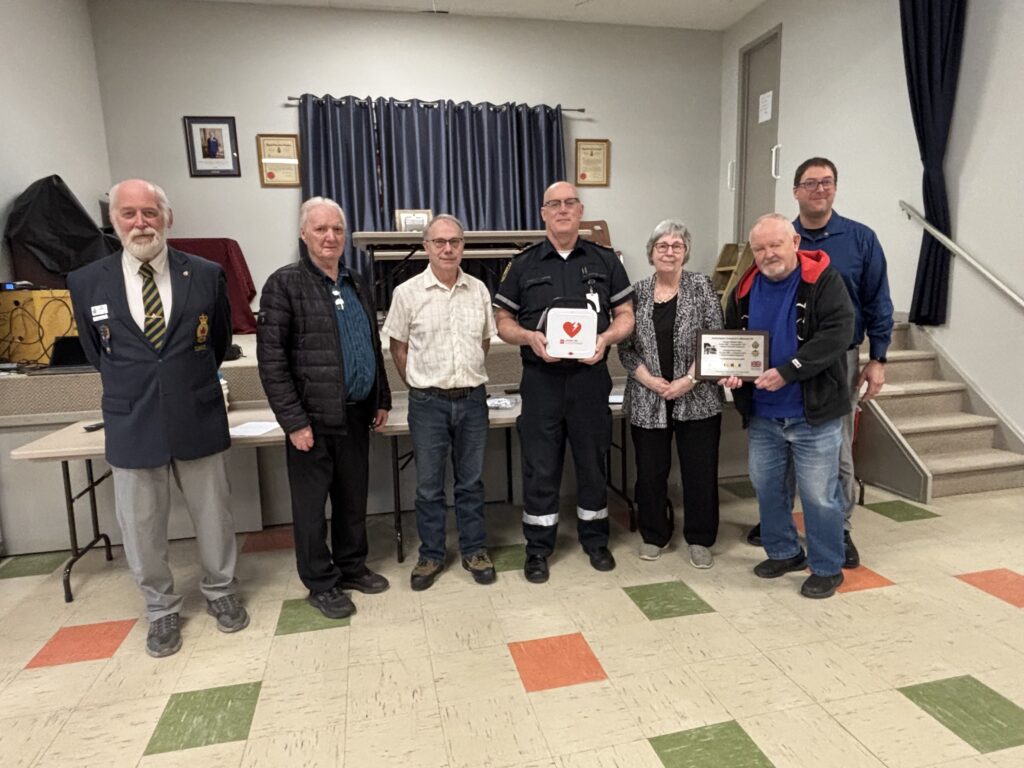
It was this history that brought a small group together on Valentine’s Day. The ceremony was attended by Scott Rutherford of Perth County Paramedic Services, who demonstrated the AED and explained the Public Access Defibrillation program; Reg Rumble, Branch President; Mike Rumble, Veteran Services Officer; and relatives of the Near family.
The Dave Mounsey Memorial Fund was established by OPP Sergeant Patrick Armstrong in honor of Provincial Constable Dave Mounsey, who died in the line of duty in 2006. It donates AEDs to public buildings in memory of fallen law enforcement, fire, EMS, and military members. To date, the Foundation has donated 242 defibrillators, saving seven lives.
“Frank and William Near gave everything,” said Mike Rumble during the ceremony. “The Near brothers couldn’t come home. But because of them, and because of the Dave Mounsey Foundation, someone else can.”
The AED is now available for public use at the Legion.
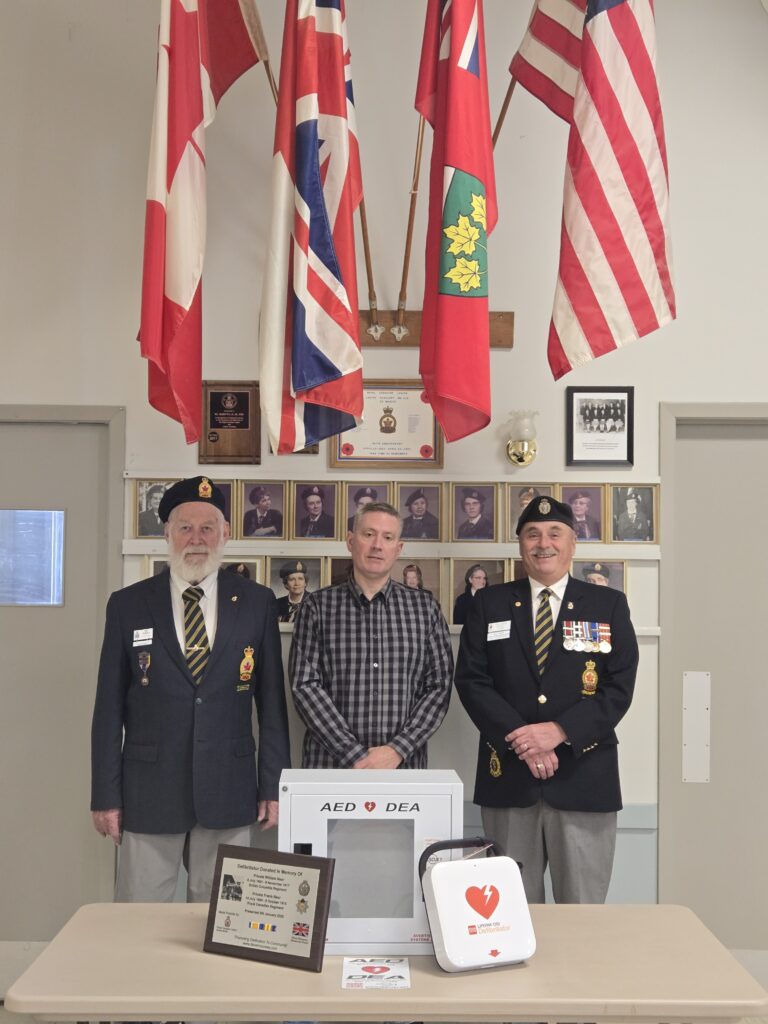
A photo from the January delivery includes Patrick Armstrong and Tom Jenkins (Zone Service Officer) and Reg Rumble (Branch President). A photo from the February dedication ceremony features Mike Rumble (Branch Service Officer), Reg Rumble, Scott Rutherford, and representative of the Near family.
International Women’s Day is a chance to celebrate women today, and it is also a chance to remember the women who carried our communities through wartime.
When we picture service, we often picture the men who enlisted and fought overseas. Many of their details were carefully recorded and preserved, and we are grateful for that. But for many women, the paper trail is thinner. Their work was sometimes documented less fully, filed differently, or not kept with the same care. That gap does not mean their service mattered less. It means we have to work harder to protect their stories now.
Through our Legion’s Banner Program, Families and Branch 236 has been able to honour and recognize those women connected to our community, who stepped forward when it counted. Women who served in uniform, in the air services, in medical roles, and in vital support trades. Women also served on the home front in ways that kept the entire war effort moving, including essential agricultural work, production, and community support. These roles were not secondary. They were necessary.
We are especially grateful to the families who have helped make this recognition possible. Bessie (Strathdee) Heaslip was remembered for her service in the Royal Canadian Air Force Women’s Division, where she met Leading Aircraftman Charles Heaslip and later boasted they were the first couple on their base to be married in uniform. Winifred (Stark) Maciver was honoured for her work with the Women’s Land Army, part of the essential “home front” workforce that kept farms running while so many men were overseas. Corporal Alice Barnett (Laurnitus), Flight Sergeant Isobel McCauley were honoured through the sponsorship of their family.
Eve Sherwin & Lieutenant Daisy Gavin (Harris) are remembered in our community as Nursing Sister’s, a role that carried both skill and quiet courage. First Lieutenant Marie Pyne is remembered locally for service as an Army nurse. Sergeant Majorie Boucher (Hicks), Private Agnes “Nesie” Houston served in an air force role connected to Great Britain and Scotland. Elsie Heinbuck served with the Canadian Womens Army Corps These family sponsorships are acts of Remembrance in their own right, and they help ensure these stories stay visible in the place they belong, in our community.
If you have photos, letters, service details, or family stories connected to any of the women honoured through our Banner Program, we would love to hear from you. Every detail helps us preserve these histories properly, as lives remembered, not just names. This year, as we commemorate the Royal Canadian Legion’s 100th anniversary, this is part of our ongoing work to memorialize the names connected to our local remembrance efforts.
Behind each banner is a real person. A neighbor. A daughter. A sister. Someone who carried responsibility quietly, often without the recognition they deserved at the time. Putting their names and service into the public view is one way we can say, we see you, and we remember. as we
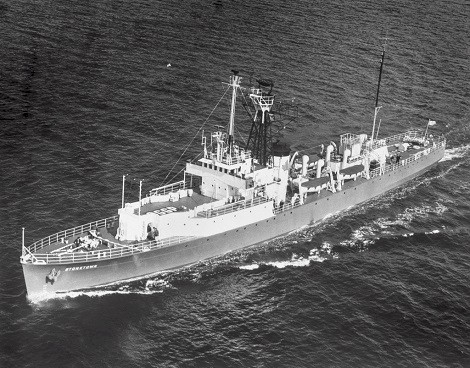
During the Second World War, Canadians didn’t just follow the war at sea through headlines. Many communities adopted the Royal Canadian Navy ship that would carry the names of the communities that adopted them, then they raised money and organized volunteer work to make life aboard a little more livable for the ship’s company.
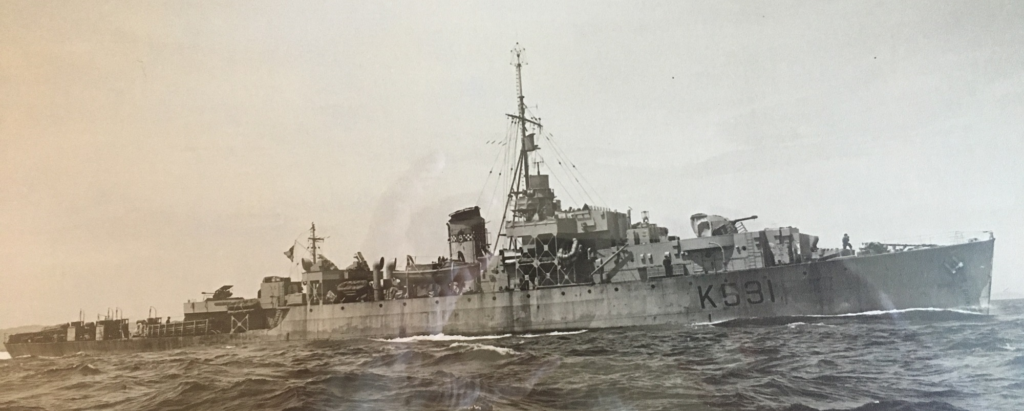
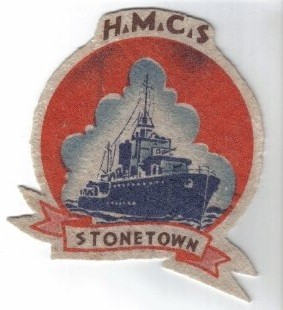
When HMCS Stone Town was commissioned at Montréal on July 21, 1944, she carried more than a pennant number. Her name was chosen using the towns nick name “Stone Town” because “St. Mary’s” was already in use elsewhere in Commonwealth navies. It was launched in a double ceremony, which set a record as the earliest launching to date on the St. Lawrence River in spring from the famous Vickers’ yards. It also was a first in the Canadian record of two naval ships going down the ways in a double launching.
David C. White, mayor of St. Mary’s J. W. Durr, Town Clerk and F. G. Sanderson, M. P. for St. Mary’s district were present for the launching. They were proud, Local committees had raised $3,000 and $4,000 (about $55,000-$75,000 of value today) for “comforts,” the extra gear and supplies for the “Stone Town”. This was an immeasurable feat coming out of a decade long depression.
Those funds could turn into things you can picture immediately aboard a crowded escort: small appliances and shop tools that helped the ship run day to day, and recreation items that helped fill the long hours off watch. The same report describes communities purchasing additional equipment and comforts not supplied through normal channels, ranging from practical items like irons or a paint sprayer to morale boosters like games and instruments.
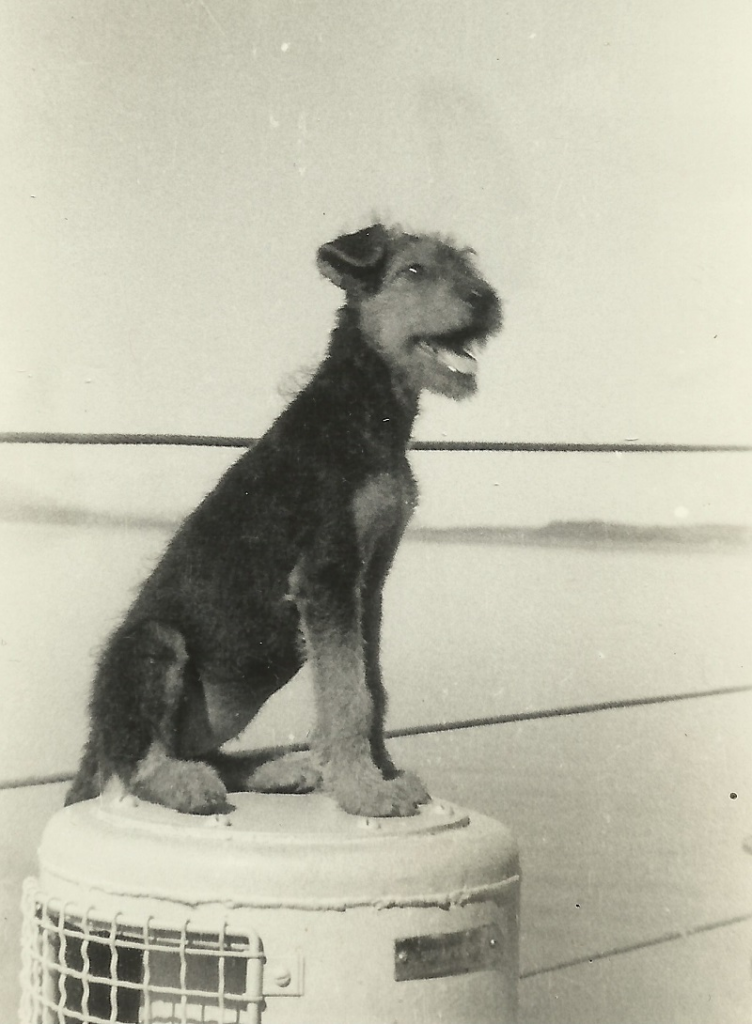
Alongside fundraising, there was a steady current of handmade support. Comfort parcels and personal kits often included basics for hygiene and correspondence, plus warmth that could not be taken for granted on the North Atlantic. Canadian Legion and Auxiliary alongside groups like the Red Cross, IODE, Women’s Institutes, Navy League, Rotary, and others supported these ships. Canadian Red Cross describes a “ditty bag” stocked with essentials and “a pair of warm hand-knit socks,” the kind of small, durable item that shows up again and again in wartime comfort work. Broader wartime “comforts” efforts also regularly meant knitted garments like socks and sweaters, produced by volunteer groups and sent overseas. Stone Town even had a mascot lovingly named “Stoney” after the ship.
Stone Town’s own service record moves quickly: arrival at Halifax in August 1944, workups in Bermuda, then mid-ocean convoy escort work as the war pushed toward its final year. But the adopted-ship relationship ran on a different clock, measured in church basements, committee meetings, donation jars, and knitted wool. The townfolk ho raised money might never see the ship in person, yet still manage to send something that ended up in a locker, a mess, or a sailor’s kit, used in ordinary moments between extraordinary ones.
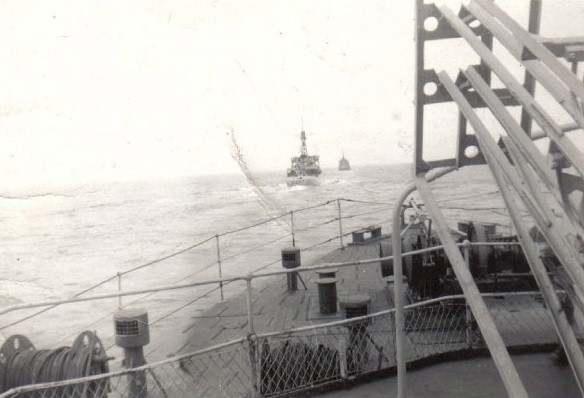
The Stone Town spent most of her wartime service as a mid-ocean convoy escort with Escort Group C-8, protecting merchant shipping on the North Atlantic routes in the final year of the Battle of the Atlantic. She carried a crew of 141, and boasted a speed of 19 knots. She carried 2 4″ (102mm), one 12 pound gun, eight 20mm guns one hedgehog motor along with depth chargers
She had only one notable incident while escorting Convoy ONS 50 on May 13, 1945, Stone Town (with HMCS Humberstone) was ordered ahead at full speed to investigate a surfaced U-boat flying a surrender flag. Stone Town circled it, confirmed it as U-244, passed surrender routing instructions, and held the situation until a Royal Navy escort arrived to take over. Then Stone Town rejoined the convoy.
After Japan surrendered, work aboard her stopped and she was placed in reserve status at Shelburne where she sat until she was sold to the Department of Transport and converted to a weather ship in 1950, sailing to Esquimalt that October. She then served on Ocean Station Papa in the North Pacific, acting as a fixed reporting platform for weather observations and aviation support over the Pacific routes, until the purpose-built weather ships took over in 1968 when she was sold to a private company to possibly be used as a fishing vessel.
Today a dedication plaque for her is on display at the St. Marys Museum as well as images of her can be seen at the St. Marys Legion branch.
At Royal Canadian Legion Branch 236 in St. Marys, we spend a lot of time thinking about how national history becomes local memory. As the Legion marks 100 years since its 1926 incorporation, we are bringing stories like this forward so the next generations will continue to remember these names, and to understand what these men were asked to give, and what they died for.
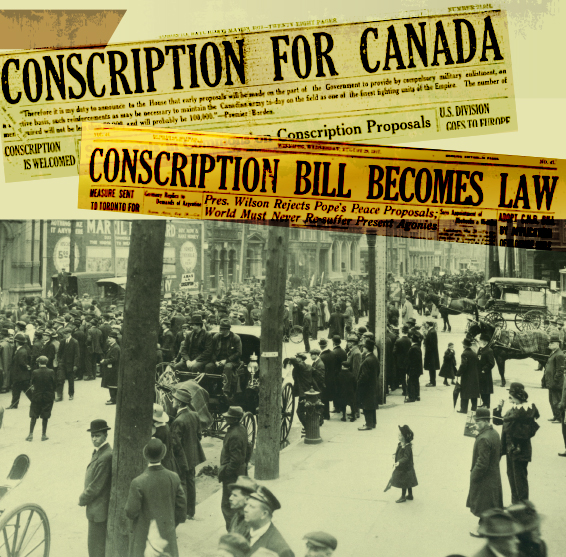
It is easy to tell the story of Canada’s 1917 conscription crisis as something that happened far away, in Ottawa, in newspaper headlines, in speeches and votes. Here in St. Marys, we live with that history in a more direct way. At the Legion, we stand in the shadow of our cenotaph, on November 11th we read the names, and we help carry the stories forward. When we talk about conscription, we are not talking about theory. We are talking about consequences that reached this town and stayed.
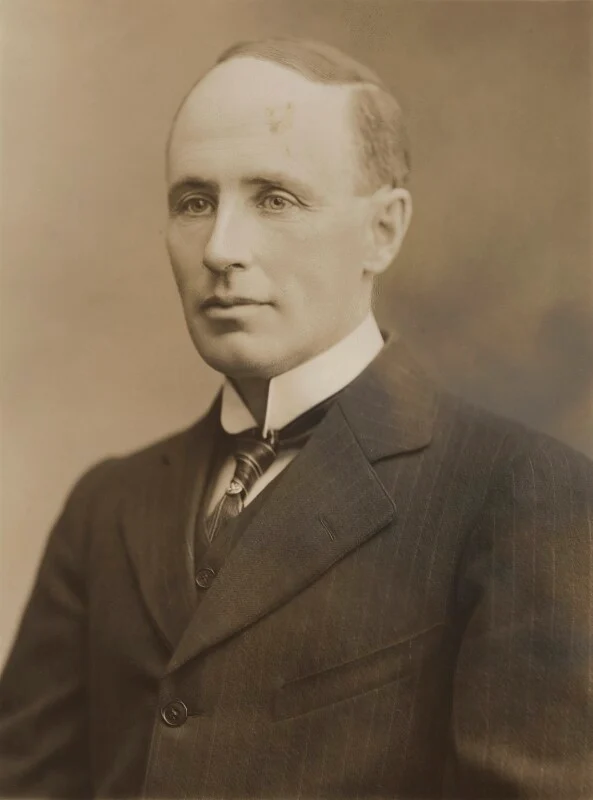
One of the principal architects of conscription was shaped right here. Arthur Meighen was born on June 16, 1874, in the hamlet of Anderson, located in Blanchard Township near St. Marys, Ontario and educated at St. Marys Collegiate right here in St. Marys. He later became one of the most forceful voices of his generation, and a prime minister. His national story still loops back to this town in a literal way, since his statue stands proud in the Park that bears his name, and he is buried at the St. Marys Cemetery.
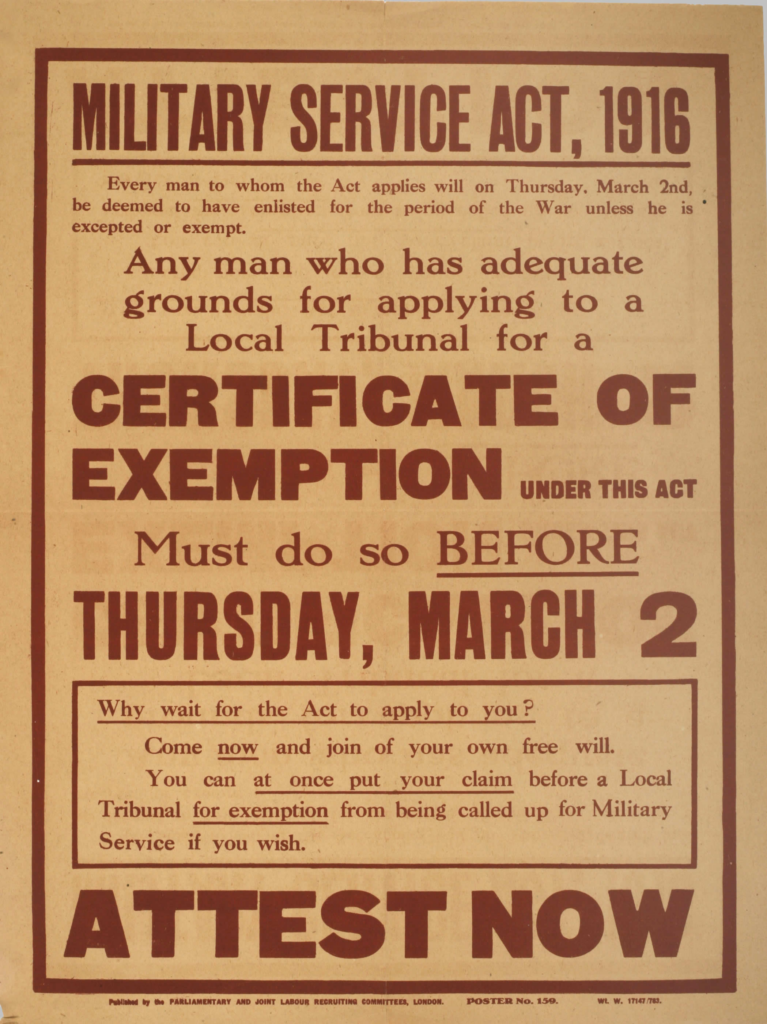
By 1917, the voluntary enlistment system was failing to maintain troop numbers. Arthur Meighen was asked to draft the Military Service Act. In this act the federal government decided to conscript young men for overseas military service. Meighen’s pro-conscription case can still be read in the text of his June 1917 speech. It is worth revisiting because it shows the tone and logic of the argument, before later retellings softened the edges. One line captures the moral frame he chose: “The obligation of honour is upon us.” The Military Service Act became law on August 29, 1917. Orders soon followed. On October 13, 1917, unmarried men (or widowers) aged 20 to 24 were ordered to report locally for medical assessments, and exemption requests became widespread.
This is where “Ottawa” stops being a location and becomes a system that reaches into every town. Once a reporting order exists, it reaches factory floors, farms, boarding houses, and family kitchens. It reaches young men whose futures were already uncertain, and it reaches parents and spouses who had no vote in the choice but lived with the outcome.
The result was not simply political disagreement. Conscription produced one of the fiercest and most divisive periods in Canadian public life. The lines of conflict ran through language and region, but also through occupation and class. Opposition was particularly strong in Quebec City, and resistance escalated into several days of rioting and street battles at Easter 1918, leaving four civilians dead and many more injured.
In towns like St. Marys, conscription was not just policy the consequences are written in stone at St. Marys Cenotaph. Among those sixty-five names, research identifies three men recorded as having entered service through conscription and then dying in uniform. Their stories are local proof that wartime decisions did not stay theoretical. The law was argued nationally by a local man came back and forever changed families here.
The first is Archie Alexander Kemp. Our cenotaph research records Kemp as drafted into the 1st Depot Battalion at Stratford on January 4, 1918, and dead by January 28, 1918 at Kirton, Ontario. This is conscription at its starkest. The draft reaches into a small community, and the loss lands almost immediately, close to home, before an overseas posting could even become part of the story.
The second is Norman Theodore Hopkin. Our cenotaph research records Hopkin as drafted under the Military Service Act on January 23, 1918 into the 1st Depot Battalion at Stratford. It then traces him overseas with the 18th Battalion, wounded on August 27, 1918, and dead on September 10, 1918. His path is what many people imagine when they picture the Great War: the front, the wound, and death overseas. What St. Marys adds, through the cenotaph record, is the origin point. He did not enter through volunteering. He entered through the draft.
The third is William Wood. Our cenotaph research records Wood as drafted into the 1st Depot Battalion at Stratford on October 26, 1917. It also records his death as influenza on October 23, 1918 at a Canadian hospital at Kinmel Park Camp in North Wales, with burial at St. Margaret’s Churchyard, Bodelwyddan. Wood’s case matters for another reason. It underlines how the cost of conscription is not only battlefield death. By late 1918, the war’s machinery was also funneling men into overcrowded camps and hospitals during the influenza wave. In that sense, the draft did not just send men toward combat. It also placed men into vulnerable spaces where disease could finish what the war began.
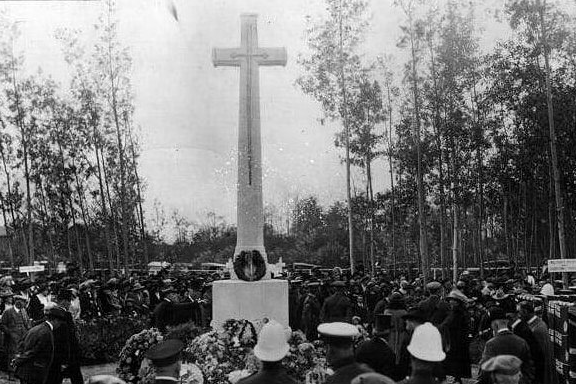
By 1921, the country was actively shaping how it would remember the sacrifices. In July of that year, now Prime Minister Meighen travelled to Vimy Ridge and delivered a major tribute to the Great War dead at the unveiling of the Cross of Sacrifice at Thelus Military Cemetery. One line stands out because it is plain, specific, and difficult to evade: “At this time, the proper occupation of the living is, first, to honour our heroic dead.” In the same speech, he reached for an image of connection across distance and time: “Across the leagues of the Atlantic the heartstrings of our Canadian nation will reach through all time to these graves in France.”
Four months later, St. Marys made its own public choice about remembrance. On November 7, 1921, The town unveiled its cenotaph beside Town Hall and carved sixty-five names into its sides. It was funded by the Women’s Institute, For us, honouring the dead is not abstract but community work and determination. It stands as list of names in public view, but it is noticing the details inside those names, including the three who entered service through conscription and did not come home.
After the war, the country faced another obligation: what came next for the living. A later profile of Meighen notes that he oversaw an initiative designed to assist financially those veterans who wished to become farmers. In practice, returned soldiers could be supported through programs aimed at land settlement, with provisions tied to land, livestock, and farm equipment. However imperfect those programs were in real life, it shows the state trying, at least on paper, to answer a hard question: what does a country owe the people it sent?
Veterans’ organizations were also consolidating into a national body in the mid-1920s. On July 17, 1926, the Canadian Legion of the British Empire Service League was incorporated under federal authority through letters patent under the Companies Act. That date falls during Meighen’s brief second term as prime minister, but the incorporation paperwork itself was handled through the Secretary of State’s department, so it is best understood as something that occurred under his government rather than a personal act. Later, the organization was formally incorporated by a federal Act in 1948, and its name was updated in later amendments.
That is part of why this history belongs at a Legion branch. We are not repeating it to reopen old arguments, or to reduce complex politics to a single villain or hero. We are carrying it forward because it connects directly to our town, our memorial, and the families who still see their own names reflected in those carved letters. As we mark 100 years, we want the next generations to remember these men as more than names on stone. We do that by keeping the record straight, by speaking plainly about how men entered service, and by returning, again and again, to the cenotaph, to the plaques on town hall, to the banners placed around town every year. Not as an artifact, but as a promise: the families of those who served will be remembered locally, with care, accuracy, and respect Remembering is not passive. It is work. It is telling the truth carefully, and then making sure it is not forgotten.
Family Day is a reminder to hold the people closest to us a little tighter. To take a day to spend with those you love. We want to take a moment to remember that years later we still remember our lost family from the St. Marys and area, the cost of war was carried by whole families, but some families suffered more loss, brothers who enlisted together, served in different theatres, and in too many cases, did not all come home.
As part of our ongoing work to memorialize the names connected to our local remembrance efforts, this article highlights families whose service stories are intertwined. For those names that are not alone on the cenotaph. Each name below links to an individual memorial page, where you can read their story in full and help keep their memory active in our community.
The Gardiner brothers
Four brothers answered the call in the First World War, each carrying the same family name into service in different ways. Two of them, Earl Edward and Edwin Lincoln, were killed in 1917, months apart. Another brother, William John, returned after being wounded and was later discharged as medically unfit. Robert Lindsay served overseas and later lived a long life at home, a reminder that service did not always end at the armistice, and that the war’s mark could follow a family for decades.
The Sandercock family story capture something especially rare: a father and sons whose service overlaps in a direct, documented way. Samuel Sandercock enlisted in 1916 and returned home due to asthma. His sons, Cecil J. Sandercock and William George Sandercock, both went overseas and were killed in 1917. William transferred into the 110th Battalion to serve alongside his father Samuel and his younger brother Cecil, making this a family story not only of shared sacrifice, but of deliberate closeness in service.
The Dewey story bridges the Second World War across two very different kinds of service. Lester James Dewey served as an infantryman and was killed in April 1945. His brother, Kenneth Welland Dewey, served in the air as a Flight Sergeant and air gunner, and was killed in July 1944. Two brothers, two theatres, one family receiving unbearable news more than once.
The Steedsman story is a reminder that “killed in war” was not always a single moment, and not always a bullet. George Frederick Steedsman was wounded in August 1917 and died two days later. His brother William John James Steedsman was discharged medically unfit and later died of tuberculosis in 1920. Sometimes the cost comes in a single moment at the front. Sometimes it follows a family home.
Two brothers from the same family were lost in the First World War, one on land and one at sea. William Laurence Evans served as a medical officer and was killed near Guillemont on the Somme in August 1916. His brother John Clow Evans served with the Royal Naval Canadian Volunteer Reserve and was lost in December 1917 while serving aboard H.M. Trawler “Sapper Herbert Bennett.” Their family was pulled into separate branches of service, and still meet the same outcome.
The Near brothers’ service was side by side as a stark timeline of loss. They travelled together into war. Frank Near was reported as missing and later presumed killed in action in June 1916. His brother William Near later suffered the same fate and was reported missing and presumed dead in August 1917. Both brothers have no known grave, their shared path makes the family connection impossible to miss.
Three brothers from one family appear in these memorial pages, with three very different outcomes. Samuel Gough was killed in April 1915. James Gough was killed in September 1916. Their brother Stephen Gough was wounded and returned to Canada in 1917. Taken together, the three stories show how a single household could be struck repeatedly, and how even the one who came home carried the war back with him.
For the McKnight family, the war touched both the battlefield and the years that followed. Lloyd McKnight served with The Royal Canadian Regiment and died of wounds in Italy in December 1943. His brother Jack Franklin McKnight rose through the ranks, eventually becoming a Captain, and later died in 1947. One striking detail recorded on Jack’s page is that he wrote home from Italy in January 1944 about only recently learning that his brother Lloyd had been killed. That is how war often moved through families: late, incomplete, and devastating all the same.
In the Second World War, the Sager family lost two sons in separate campaigns. Roy Edgar Sager was reported missing on August 1, 1944 and later confirmed killed in action after his body was found. His older brother William Franklin Sager was killed in Germany on March 3, 1945. Their pages also keep the family link front and centre, showing two brothers moving through service, injury, postings, and ultimately the same final outcome.
Family Day is often celebrated with meals, visits, and the kind of ordinary time we usually assume we will always have. These families did not get that luxury. Their names are part of the story of this community, and reading even one memorial page is a small act of respect that keeps that story present.
If you have a connection to any of these names, or if you have family stories you think should be included in our remembrance work, consider reaching out through the Legion and helping us continue building a record that future families can find, read, and remember.
Some dates live in a history book. Others live in a community.
By January 1944, the Perth Regiment had already learned that Italy was not going to give ground easily. The men had come ashore months earlier into a country carved up by rivers and ravines, where stone farmhouses could mean shelter or a trap depending on who reached them first. Ortona had fallen just before Christmas, but the fighting did not end. It shifted north into winter fields and broken roads, toward high ground overlooking the Arielli Valley, where the enemy had time, experience, and the advantage of position.
The Perths held the line, patrolled forward, and studied that ground with a kind of quiet dread. The approaches were covered. The positions were prepared. Even before orders came, the men knew something was coming.
On January 17 at 5:30 at, the regiment was ordered to move forward.
Before daylight, companies moved out into cold air and wet ground. Boots slipped in mud that wanted to keep them. Rifles were held tighter than usual. Somewhere ahead, German paratroopers were already awake and watching. When firing started, it was sudden and exact. Machine guns stitched the slopes. Mortars dropped into the advancing troops. Communication faltered. Sections lost sight of each other. And still, men pushed on.
Those who remember him remember a young man from Perth whose name would later be carved in metal on the side of the townhall his wife would pass everyday awaiting news of his fate. Oral tradition within the regiment holds that Willmore was the first member of the Perth Regiment to be killed in action. Whether the paperwork confirms it or not, that belief has endured for decades, passed quietly from one generation to the next. The perths sustained 137 casualties in that first day of combat, including more than 40 deaths, in what Johnston called a “baptism by fire.” What is certain is that Willmore fell during the regiment’s first major assault, at the moment when training stopped being practice and became permanent cost.
In the same bitter ground, in the folds of the valley and the confusion of fire and movement, Private William Russell Stewart was also lost. His death is remembered as having occurred “in the Valley,” a phrase that says more than it seems. The Arielli Valley was not one clear place. It was slopes, gullies, exposed approaches, and danger from every direction. It was terrain that could swallow men and moments alike.
The fighting dragged on through the day. Platoons clung to whatever cover they could find. Counterattacks came. Orders were delayed, or never arrived. By nightfall the decision was made to pull back. The objectives could not be held. The wounded were gathered in darkness. The fallen were left behind, not from lack of care, but because war does not always allow the dignity people deserve.
Among those connected to this early period in the regiment’s history was also Corporal John Raymond McRobb, EM. It is said that he joined the Perths at the Fiumicino River, another name that carries weight for those who know the Italian campaign. Rivers marked progress and sacrifice in equal measure. To cross one often meant blood had already been spilled. He would not be a casualty of the day, he would climb out of the bloodied mud that day and go on to continue the fight further into Italy along with many more.
January 17 did not bring a breakthrough. The line did not move north. But it marked something just as important. It was the day the Perth Regiment truly entered the war as a fighting unit, not on paper, not in theory, but in loss. It was the first, and only, time during the entire war that they were unable to achieve their combat objective. But it did not end there. As Allied forces pushed through Italy toward France, the Perths played a pivotal role in other vital campaigns. All told, the Perth Regiment was awarded 10 primary battle honours and four secondary honours for their successful service. By the end of the war, 261 Perth soldiers had lost their lives fighting for home and country.
This year, as we commemorate the Royal Canadian Legion’s 100th anniversary, we want to highlight the names on the Cenotaph, banners, and memorials around St. Marys not as words on a wall, but as people: men and women connected to our shared history, who lived, served, and in some cases, died.
We invite you to read and share their stories, so their names remain living history.
Each year, the National Youth Remembrance Contests invite Canadian youth to honour our Veterans and keep the tradition of Remembrance alive through artwork and writing. With the support and encouragement of teachers in our local schools, students are inspired to take part and share what Remembrance means to them. Today we celebrate our Branch winners whose entries may advance through Branch, provincial, and national levels—where top awards include cash prizes and, for First Place Senior winners, the opportunity to attend the National Remembrance Day Ceremony in Ottawa.
2025 Contest Winners
Primary Colour Poster
1. Jolee Beech
2. Lacey Terpstra
3. Briar Corneil
Junior Colour Poster
1. Kassy Van Erik
2. Sofia Leclair
3. Rylan Lord
Intermediate Colour Poster
1. Sophia Johnston
2. Paula Black
3. Maayan Heaton
Senior Colour Poster
1. Charlie Ferguson
2. Bennett Herbert
Junior Black & White Poster
1. Kylie Blake
2. Clark Monteith
3. Ayla Boemer
Intermediate Black & White Poster
1. Saskia-Lyn de Boer
2. Clara Shepley
3. Miljhey Jane Sagapi
Junior Essay
1. Reed Martin of South Perth Centennial Public School
2. Grace Jacobs of South Perth Centennial Public School
3. Samantha Wilson of South Perth Centennial Public School
Intermediate Essay
1. Tayia Jezard of Downie Central Public School
2. Logan Westman of South Perth Centennial Public School
Junior Poetry
1. Grace Jacobs of South Perth Centennial Public School
2. Greyson Gilbert of Little Falls Public School
3. Finn Reid of Little Falls Public School
Intermediate Poetry
1. Ryan Zwamba of South Perth Centennial Public School