
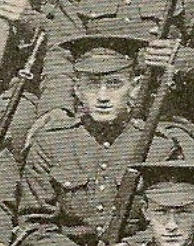
A Life and Service Remembered: Private William Near (401470)
Service highlights
- Name: William Near
- Born: 2 March 1892 (Attestation papers say 8 July 1891)
- Rank: Private
- Service number: 401470
- Hometown: St. Marys, Ontario
- Enlisted: 16 August 1915 (33rd Canadian Infantry Battalion, London, Ontario)
- Sailed for England: 1 April 1916, aboard the SS Lapland (with his brother Frank)
- Transferred overseas: Diverted to the 7th Canadian Infantry Battalion after arriving in France (reinforcements needed)
- Role noted later in service: Battalion Headquarters runner (message carrier)
- Missing, presumed dead: Night of 8 November 1917, near Mosselmarkt, north of Passchendaele, Belgium
- No known grave: Commemorated on the Ypres (Menin Gate) Memorial to the Missing
A Life and Service, Remembered
William Near grew up in St. Marys at 24 Peel Street South, part of a family that would be marked, like so many others, by the First World War. Before enlistment he worked as a freight agent, an ordinary job in an ordinary town, and then in August 1915 he enlisted in the 33rd Battalion. Almost two months earlier his younger brother, Frank, had already joined up. https://rcl236stmarys.ca/cenotaph/frank-near/
On April 1, 1916, the brothers sailed together from Halifax aboard the SS Lapland. It is hard to overstate what that means in a family story: not just two enlistments, but two sons crossing the Atlantic at the same time, stepping away from everything familiar, side by side.
William did not remain in England for long. In May 1916 he was posted onward, and on the way to his new unit he was diverted through the base depot at Le Havre to the 7th Canadian Infantry Battalion, a unit that badly needed replacements after heavy casualties. He arrived with them in early June 1916 and, for a time, his duties kept him away from the routine trench cycle. He was employed in the Transport Section, the unglamorous but essential work that kept a battalion supplied and moving.
There is a thread of brotherhood that runs quietly through his record. Around this time William applied to have Frank join his battalion. It never happened. Frank was killed on the Somme in October 1916, before the transfer could take place.
William carried on. In early 1917 he spent weeks in hospital and in a convalescent depot with laryngitis, then returned to duty. Through much of 1916 and 1917 his service was described as relatively secure, and he was not closely involved in some of the major battles that filled the headlines. That changed in the fall of 1917 when he was cross-posted to Battalion Headquarters as a runner.
Runners were the human link when wires were cut and reliable communication broke down. They carried messages between headquarters and the companies under fire, often during bombardments and machine-gun barrages, moving without the cover that other roles sometimes had. It was dangerous work, and statistically, the odds were against anyone who did it for long.
William kept a small pocket diary. After he died, it was returned to his parents. The last entry, dated November 7, 1917, was brief and ordinary in the way wartime notes often are. He wrote that he had sent a letter to his mother, and that it was cold and raining.
The next night, November 8, 1917, the 7th Battalion was moving forward in darkness into assembly trenches near Mosselmarkt, north of Passchendaele, preparing for an attack on German positions. During the night William was hit, likely by shellfire. Survivors later reported that he had been killed, but his grave was never found. He was listed as missing and presumed dead.
He is commemorated by name on the Ypres (Menin Gate) Memorial to the Missing in Belgium. His story is also part of a larger family story in St. Marys, one that includes the earlier death of his brother Frank, and the grief carried home to parents who never received a grave to visit, only names carved into the memorial stone cenotaph. His Lodge brothers from St. Marys Independent Order of Odd Fellows, Lodge 36, erected a memorial in the St. Marys Cemetery to remember the lodge brothers that had died overseas. William was remembered along side his lodge brothers Frank Ellis and Alexander Freeman.
Major battles and operations
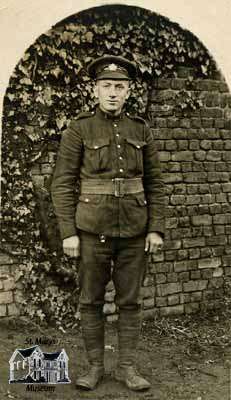
- Overseas embarkation: SS Lapland (1 April 1916)
- Reinforcement and diversion to 7th Battalion: France, June 1916
- Hospital and convalescence: Laryngitis (27 Feb to 11 May 1917)
- Battalion Headquarters runner: Fall 1917
- Passchendaele period operations: Night move into assembly trenches near Mosselmarkt (8 Nov 1917), missing and presumed dead, no known grave
Learn more
Commonwealth war graves commission
https://www.cwgc.org/find-records/find-war-dead/casualty-details/1594914/william-near/
Veterans Affairs Canada, Canadian Virtual War Memorial:
https://www.veterans.gc.ca/en/remembrance/memorials/canadian-virtual-war-memorial/629326
Passchendaele Archives
https://archives.passchendaele.be/en/soldier/5387
Richard Holt, The Fallen, entry for Private W Near, 401470, page 49
Frank Near https://rcl236stmarys.ca/cenotaph/frank-near/