
Service highlights
- Service number: 418032
- Rank: Sergeant
- Born: St. Marys, 16 March 1892
- Education: graduated from St. Marys Collegiate, spent three years in business in Toronto
- work: Storekeeper
- Early military involvement: joined a Montreal militia unit, the 5th Royal Highlanders of Canada (Black Watch), in late August or early September 1914
- Enlisted in the Canadian Expeditionary Force: 17 February 1915, 42nd Canadian Infantry Battalion (Royal Highlanders)
- Arrived in France: 9 October 1915, with the 3rd Canadian Division
- Served in Belgium: routine duties in the Ypres Salient including Mount Kemmel and Sanctuary Wood
- Survived: the intense fighting at Mount Sorrel in June 1916 without injury
- Promotion: from private to sergeant, serving as second in command of a 50 man platoon
- Killed in action: 15 September 1916, likely by shellfire, during the Somme fighting near Pozières
- Burial: Reinterred in March 1919 at Courcelette British Military Cemetery
- Commemorated: on the cenotaph in St. Marys
A Life and Service Remembered
James Franklin Webster was born in St. Marys in 1892, and his early years carried more change than most. After his mother died, family life shifted. Records in the book describe him living with his grandparents, John and Jane Webster, while his father remarried. When his grandparents later died and his father left town, James found steadiness with his aunts, Florence and Ella, in St. Marys. When he joined the Canadian Expeditionary Force, he listed Ella as his next of kin, a small detail that quietly shows who was in his corner.
After graduating from St. Marys Collegiate, he spent three years in Toronto in business, then moved to Montreal, working as a storekeeper. Soon after the war began, he joined the 5th Royal Highlanders of Canada (Black Watch) and trained with them part time. On 17 February 1915 he enlisted in the 42nd Canadian Infantry Battalion (Royal Highlanders). The book’s wording is plain about his ability. He was promoted quickly, first to corporal and then from private to sergeant in less than a year, serving as second in command of a 50 man platoon.
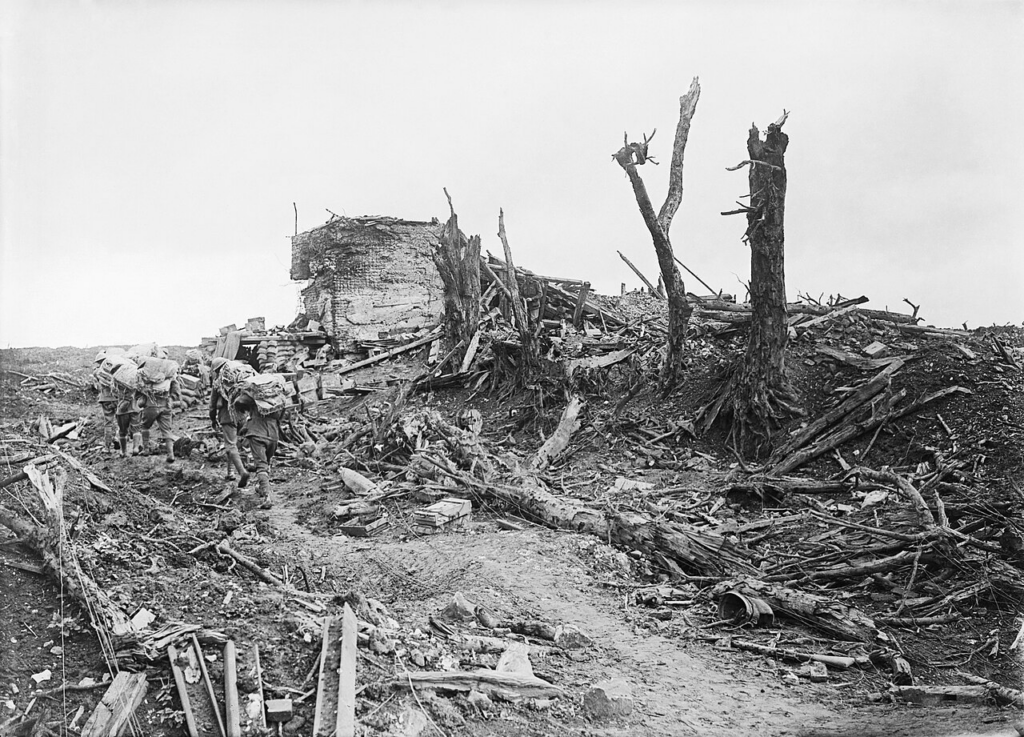
He sailed for overseas in June 1915 on the SS Hesperian. By October he was in France with the newly raised 3rd Canadian Division, then sent into Belgium for months of routine duty in the Ypres Salient. He came through Mount Sorrel in June 1916 without a scratch, but the Somme in September was different. On 15 September, after being ordered with only hours’ notice to attack at 6 p.m., the 42nd went over the top and took German positions in the Sunken Road and Fabeck Graben trenches. Enemy artillery pounded their new line, and the battalion suffered heavy losses.
Sergeant Webster was killed sometime on 15 September 1916, probably by shellfire. He was first buried by his comrades, then in March 1919 his remains were recovered and reinterred at Courcelette British Military Cemetery. His headstone carries an epitaph chosen by his Aunt Ella: “A gallant soldier, a true comrade, he made this sacrifice for freedom.”
Major battles and operations
- Militia training with the 5th Royal Highlanders of Canada (Black Watch), Montreal, 1914 to 1915
- Enlisted 42nd Canadian Infantry Battalion (Royal Highlanders), 17 February 1915
- Sailed to England on SS Hesperian, 10 June 1915
- France and Belgium with the 3rd Canadian Division, arrived 9 October 1915
- Ypres Salient service including Mount Kemmel and Sanctuary Wood, 1915 to 1916
- Battle of Mount Sorrel, June 1916
- Battle of the Somme, near Pozières, 15 September 1916
- Assault and capture of positions in the Sunken Road and Fabeck Graben trenches, then heavy artillery bombardment
- Killed in action, 15 September 1916, likely by shellfire
- Reinterred at Courcelette British Military Cemetery, March 1919
Learn More
- https://www.veterans.gc.ca/en/remembrance/memorials/canadian-virtual-war-memorial/576187 https://livesofthefirstworldwar.iwm.org.uk/lifestory/5781770
- https://www.cwgc.org/find-records/find-war-dead/casualty-details/196446/james-franklin-webster/ https://canadiangreatwarproject.com/person.php?pid=10511 https://central.bac-lac.gc.ca/.item/?op=pdf&app=CEF&id=B10192-S038 https://astreetnearyou.org/person/196446/Sergeant-James-Franklin-Webster
- https://www.everyoneremembered.org/profiles/soldier/196446/ https://somme-roll-of-honour.com/Units/canadian/42nd_Canadian_Infantry_CEF.htm
- The Fallen by Richard Holt, 418032 Sergeant J.F. Webster. pg 80