
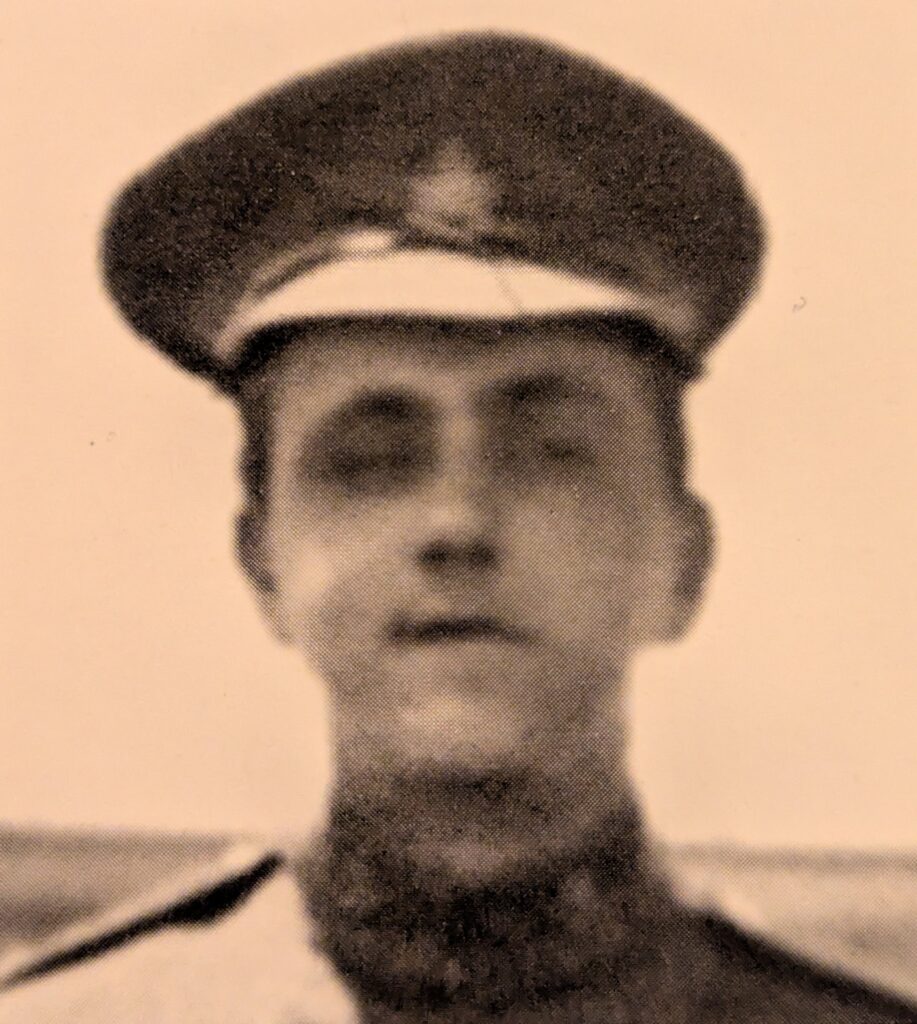
Service highlights
- Service number: 727096
- Rank: Private
- Born: London, 20 December 1898
- Came to Canada: moved to St. Marys with his family in 1908
- Civilian life: woodworker,
- Enlisted: 110th (Perth) Battalion at St. Marys, 23 November 1915
- Reinforcement system: transferred to the 8th Reserve Battalion on 1 January 1917
- Underage for front line service at the time, transferred to the 119th Battalion at Shoreham to wait until his birthday
- Posted to the front: 28 March 1918 to the 52nd (New Brunswick) Battalion, serving near Mericourt
- Temporarily transferred for machine gun training: 3rd Canadian Machine Gun Battalion, then returned to the 52nd after six weeks
- Wounded and died: 8 August 1918, during the Canadian offensive near Amiens
- Buried: Longueau British Cemetery
- Commemorated: on the St. Marys cenotaph
A Life and Service Remembered
William Sweeney was born in London, England, and came to St. Marys as a boy in 1908. He worked as a woodworker and lived with his parents on Church Street South, the kind of steady home life that can make a name on a cenotaph feel especially close.
He enlisted in the 110th (Perth) Battalion in November 1915. William and his father Thomas falsified their ages to enlist, a detail that lands with a mix of pride and sadness. It suggests a family that felt the pull of service so strongly they were willing to bend the rules to answer it. Though William enlisted four months after his father
Training took him through Ontario and then overseas on the SS Caronia on October 31 1916. In England, he was routed through the reinforcement system, but because he was still only 18, regulations kept him from the front until he was old enough, so he trained until he was 19 on paper. That waiting lasted a long time. He was moved from unit to unit until, in March 1918, he finally reached the 52nd Battalion in France.
Even then, his path kept shifting. He was selected for machine gun training as part of the effort to build machine gun battalions, then returned to his unit after six weeks, one of many men moved around to fill urgent needs.
On 8 August 1918, the Canadian Corps attacked near Amiens, the beginning of what Canadians later called Canada’s Hundred Days. William was wounded by shellfire in the Luce River valley and evacuated to 1st Canadian Field Ambulance with a fractured leg and shrapnel wounds to his left knee and hand. He died shortly after being admitted.
His headstone carries words chosen by his mother: “Be thou faithful unto death and I will give thee a crown of life.” He was survived by his parents, Thomas (who had been wounded in 1916) and Elizabeth Sweeney, along with two brothers and four sisters. A family photograph survives at the local museum and lists the children by name, including William, and it is hard not to picture the gap his loss left behind. His name is etched in the stone of the St. Marys cenotaph. His story meant to be remembered.
Major battles and operations
- Canadian reinforcement and training system in England (from late 1916 into 1918), including delays due to age restrictions for front line service
- Front line service with the 52nd Battalion at Mericourt, France (from 28 March 1918)
- Machine gun training attachment with the 3rd Canadian Machine Gun Battalion, then returned to the 52nd
- Battle of Amiens and the opening of Canada’s Hundred Days, 8 August 1918
- Wounded by shellfire in the Luce River valley
- Died the same day at the 1st Canadian Field Ambulance
Learn More
- Veterans Affairs Canada, Canadian Virtual War Memorial
https://www.veterans.gc.ca/en/remembrance/memorials/canadian-virtual-war-memorial/576647 - Canadian Great War Project, profile
https://canadiangreatwarproject.com/person.php?pid=10940 - Library and Archives Canada, service file PDF
https://central.bac-lac.gc.ca/.item/?op=pdf&app=CEF&id=B9461-S033 - Imperial War Museums, Lives of the First World War
https://livesofthefirstworldwar.iwm.org.uk/lifestory/5737208 - Commonwealth War Graves Commission, casualty record
https://www.cwgc.org/find-records/find-war-dead/casualty-details/205448/william-sweeney/ - RootsWeb newsletter PDF (as provided)
https://sites.rootsweb.com/~casoccgs/news0717.pdf
https://rcl236stmarys.ca/cenotaph/sweeney-private-thomas/ - The Fallen, by Richard Holt, 727096 Private W. Sweeney, pg 71
Source: https://www.veterans.gc.ca/en/remembrance/memorials/canada/st-marys-cenotaph