
Service highlights
- Regimental number: 603112
- Born: April 10 1882
- Enlisted: 26 August 1915, London, Ontario
- Initial unit at enlistment: 34th Battalion, Canadian Expeditionary Force
- Served in France with: 4th Battalion, Canadian Infantry
- Wounded: 9 October 1916, shrapnel wound to the right hand, returned to duty on 15 October 1916
- Good Conduct Badge: awarded during service (one badge recorded)
- Rank progression: appointed Lance Corporal on 21 January 1918, promoted to Sergeant on 29 April 1918
- Wounded again: 4 September 1918
- Returned to Canada: April 1919
- Discharged: 24 April 1919, Toronto, Ontario, demobilization
A Life and Service Remembered
Frank William Hames was born in London, England on 10 April 1882. By the time he enlisted, he was living in St. Marys, Ontario, working as a bricklayer, a practical trade that often meant long days and tough hands. His attestation records his wife, Violet, as his next of kin, a small detail that quietly anchors the whole story: he was not heading overseas as an anonymous name on a list, but as someone deeply tied to home.
He enlisted in late summer 1915 and soon found himself crossing the Atlantic on the SS California, arriving in England on 7 November 1915. After arriving in England, he moved through the reinforcement system before being sent to the 4th Battalion in France. Like so many, his service was not a single dramatic moment but a long stretch of endurance, mud, exhaustion, and danger that could change in a second.
In October 1916 he was wounded in the right hand by shrapnel and evacuated, then returned to duty only days later. Later, he earned a Good Conduct Badge, and his responsibilities grew. He was appointed Lance Corporal in early 1918, then promoted to Sergeant that spring, the kind of steady rise that suggests trust earned in the hardest conditions.
One of the most human glimpses we have of Frank comes through a letter he wrote from the front. In it, he speaks about the death of a friend from St. Marys, Charles Thomas Richardson. Frank describes being at his side when a heavy shell killed him instantly, and the loneliness that followed, writing that there were no St. Marys men left in his platoon and that he felt on his own again. It is a simple line, but it carries the weight of what these men lost beyond the battlefield: the familiar voices, the shared background, and the small comforts of home.
Frank was wounded again in September 1918, then survived the war and made it back to Canada in 1919. He was discharged in Toronto at the end of April, one more returning soldier carrying a life that had been permanently reshaped by what he had seen.
Major battles and operations
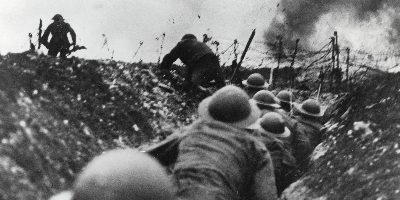
Frank served in France with the 4th Battalion during a period that included many of the Canadian Corps’ defining operations. During his time with the battalion, it fought through the grinding battles of the Western Front, including major Canadian actions in the Ypres Salient, the Somme in 1916, Vimy Ridge in 1917, Passchendaele in 1917, and the Hundred Days offensives of 1918. His two recorded woundings, in October 1916 and September 1918, fall within two of the war’s most punishing phases.
Learn More
Past Voices (letters and context)
https://pastvoices.com/canada/hames/
Canadian Great War Project profile
https://canadiangreatwarproject.com/person.php?pid=1006240
Library and Archives Canada, CEF service file (B3974-S033)
https://central.bac-lac.gc.ca/.item/?op=pdf&app=CEF&id=B3974-S033
https://rcl236stmarys.ca/cenotaph/richardson-pte-charles-thomas/