
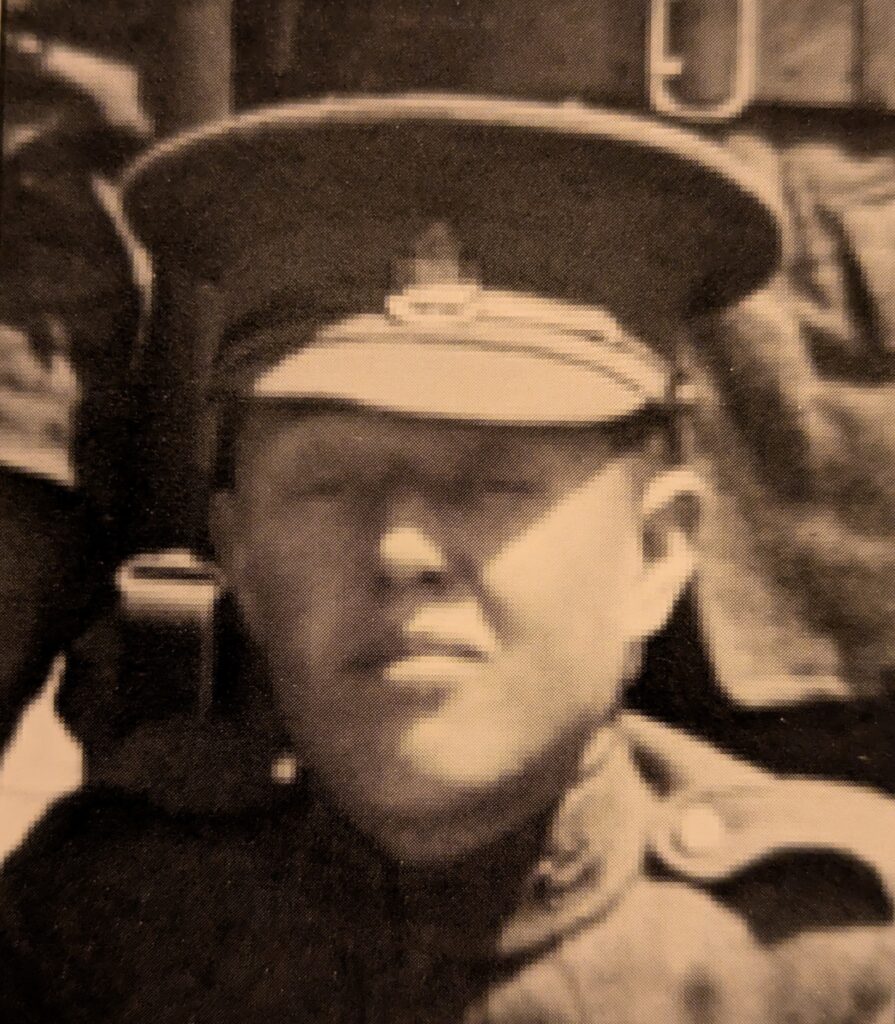
Service highlights
- Service number: 727071
- Rank: Private
- Hometown: St. Marys, Ontario
- First attempt to enlist: 71st Canadian Infantry Battalion, St. Marys, enrolled 5 October 1915, discharged 13 October 1915 (poor eyesight)
- Enlisted again: 110th (Perth) Canadian Infantry Battalion, accepted 13 November 1915
- Training locations: Carling Heights (London, Ontario), then Camp Borden
- Sailed overseas: 31 October 1916 on the SS Caronia
- Reinforcement system: transferred to the 8th Reserve Battalion on 1 January 1917
- Front line unit: joined the 58th Battalion in France on 27 February 1917
- Wounded: 12 April 1917 (treated at the Regimental Aid Post)
- Hospitalized briefly: 26 June 1917 with “general debility,” returned to duty by 2 July 1917
- Killed in action: 13 November 1917 in the Ypres Salient area
- Commemorated: Menin Gate Memorial (Ypres) and the St. Marys cenotaph
- No known grave, his name is also remembered on his sister’s headstone in St. Marys Cemetery
A Life and Service Remembered
Frank Raymond Sinclair was born in St. Marys, but even his birthdate is a little uncertain. On different enlistments he gave different dates, and the 1911 census recorded yet another. The simplest explanation is also the most human one: like many young men eager to serve, he likely stretched the truth about his age to get in.
He worked as a farm labourer and probably lived at home with his parents. When he first tried to enlist in October 1915, he was turned away quickly due to poor eyesight. A month later he reapplied and this time he was accepted, possibly helped by relaxed vision standards as the need for infantrymen grew. That second attempt says a lot about him. He wanted in, and he did not give up easily.
Training carried him through London and Camp Borden. His record shows one rough patch in August 1916 when he was absent without leave for a week and was punished with seven days in the guardroom. It reads like a moment of youthful misjudgment, but it did not end his service. He went overseas that fall on the SS Caronia and moved through the reinforcement system in England before reaching France with the 58th Battalion in early 1917.
He fought through some of the hardest fighting Canadians faced that year. He was wounded after Vimy Ridge, later fell ill and recovered, and returned to his unit in time for the summer and autumn battles. In November 1917, during the brutal fighting around Passchendaele, he was killed in action, likely during the heavy bombardment that preceded a German counterattack.
Frank was survived by his parents, Daniel and Rosebell Sinclair of St. Marys, and by three sisters, Emily, Nellie, and Helen Myrtle. Helen Myrtle died the following year during the influenza epidemic. Frank is remembered on the Menin Gate Memorial in Belgium and on the cenotaph in St. Marys, a name kept close to home even when a grave could not be found.
Major battles and operations
- Vimy Ridge, April 1917 (wounded 12 April 1917)
- Hill 70, August 1917 (returned to the 58th by 2 July 1917 in time for this operation)
- Ypres Salient, October and November 1917
- Fighting near Passchendaele, including actions tied to Bellevue pillboxes and the Snipe Hall strongpoint area
- Defensive and support duties as the situation shifted, with the battalion brought forward again on 11 November
- Killed in action 13 November 1917 during the period of German counterattacks and intense shelling
Learn More
- Veterans Affairs Canada, Canadian Virtual War Memorial
https://www.veterans.gc.ca/en/remembrance/memorials/canadian-virtual-war-memorial/638706 - Canadian Great War Project, profile
https://canadiangreatwarproject.com/person.php?pid=59269 - Library and Archives Canada, service file PDF
https://central.bac-lac.gc.ca/.item/?op=pdf&app=CEF&id=B8940-S030 - Find a Grave, memorial page
https://www.findagrave.com/memorial/12028183/frank-raymond-sinclair - Richard Holt, The Fallen 727071 Private F.R. Sinclair, Pg 65